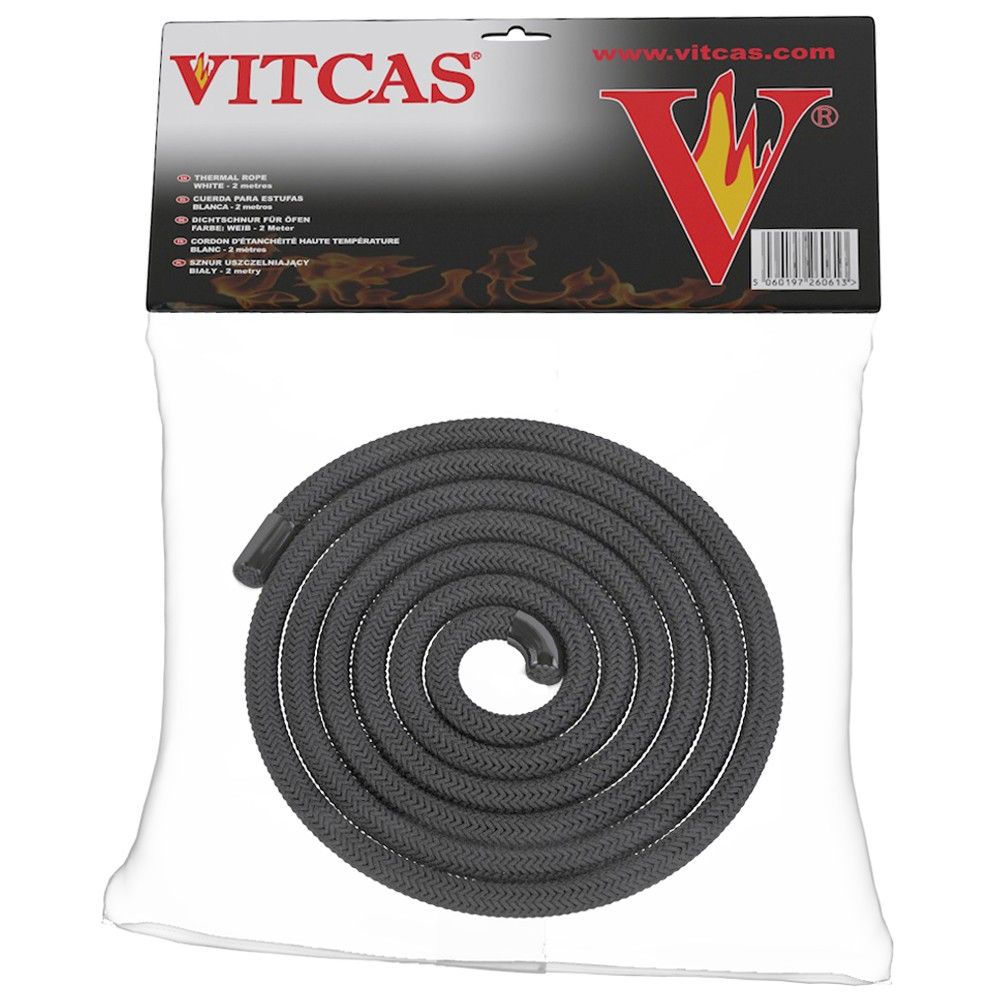
The cord in a tiled stove is replaced when the door construction allows for such a gasket and it has worn out. Adding a cord to old doors that previously did not have one is a different task. It can alter the airflow and combustion conditions, so it requires an assessment of the stove's construction.
Worn cord or a frame problem?
On a cold stove, inspect the gasket, hinges, and closing mechanism. Check whether the frame is stable and whether the door is deformed. If a component moves within the casing, simply replacing the cord will not fix its seating.
In an older stove, the documentation may be incomplete. It is then worth preparing photos of the door, groove, and lock for discussion with a stove fitter. They will be able to determine whether the sealing needs to be restored or if the frame first requires repair.
Gasket Selection
Determine the cross-section, diameter, and method of attachment. A worn cord may be flattened, so its current size may not correspond to the new material. A thicker gasket should not replace lock adjustment.
Vitcas heat-resistant cord and RA cord adhesive should be selected according to the intended temperature, substrate, and door construction. Before purchasing, also check whether a round cord, a different cross-section, or another solution is needed. One diameter does not fit all tiled stoves.
Replacing an existing cord
- Remove the old material and adhesive residues without damaging the frame.
- Fit the new cord without stretching or twisting.
- Secure it with the appropriate adhesive according to the instructions.
- Allow drying time and check for even door pressure.
After the first heating cycles, check the seal when cold. Do not compensate for irregularities by permanently not closing other doors or changing the way air is supplied. If the behavior of the furnace has changed after replacement, the selection of the gasket and the entire adjustment must be checked with someone who knows its construction.